Description
Rigid cranial stabilization system engineered for precision neurosurgical positioning.
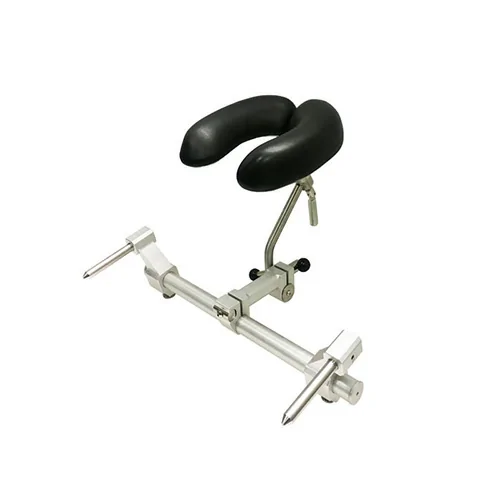
The Luvis Surgery Head Frame provides high-precision cranial immobilization for neurosurgery, ENT procedures, and image-guided interventions. Constructed from medical-grade stainless steel and radiolucent composite components, the frame offers stable 3-point or multi-point fixation to support accurate surgical access and instrument navigation. Its adjustable arc and calibrated locking system maintain rigid immobilization during drilling, retraction, microdissection, or navigation-guided work.
The frame includes adjustable elevation rails, rotational pivoting capability, and torque-controlled fixation, enabling a wide operative field without compromising patient safety. Typical adjustment ranges include ±30° pitch, ±25° yaw, and vertical height travel of 80–120 mm depending on configuration. The system interfaces with standard surgical table side rails using a universal clamp architecture and is compatible with common skull pins and support pads.
Key Features & Technical Highlights
• Multi-point fixation system — ensures secure cranial immobilization for high-precision surgery.
• Stainless steel and composite construction — provides rigidity while maintaining radiolucency.
• Wide angular adjustment range — accommodates optimal head orientation for neurosurgical exposure.
• Torque-controlled locking — maintains position stability during drilling and microsurgical work.
• Universal side-rail interface — integrates with most OR tables and mounting platforms.
• Vertical height adjustment — enables fine elevation control for surgeon ergonomics.
• Removable components — rapid configuration for pediatric or adult applications.
• Smooth, calibrated pivots — allow controlled repositioning without loss of alignment.
Workflow & Clinical Use
The Surgery Head Frame enhances operative efficiency by maintaining stable, repeatable positioning throughout long neurosurgical procedures. Its rigid structure and fine adjustment capability improve surgical access and patient safety during delicate cranial work. Radiolucent components support reliable intraoperative imaging and navigation accuracy.